Berlin
Curated by Seven Places
Culture
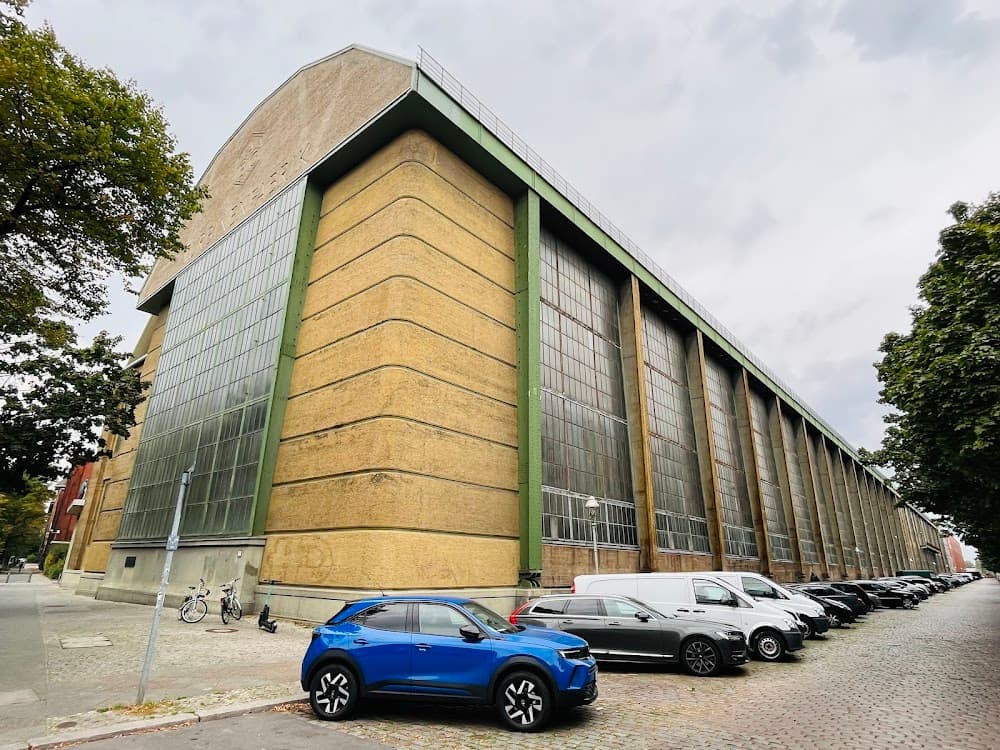
AEG Turbine Factory
Peter Behrens' 1909 turbine hall in Moabit, often cited as the first truly modern industrial building. Steel and glass given monumental, almost temple-like dignity — a hinge point between historicism and modernism, and an early training ground for Gropius and Mies.
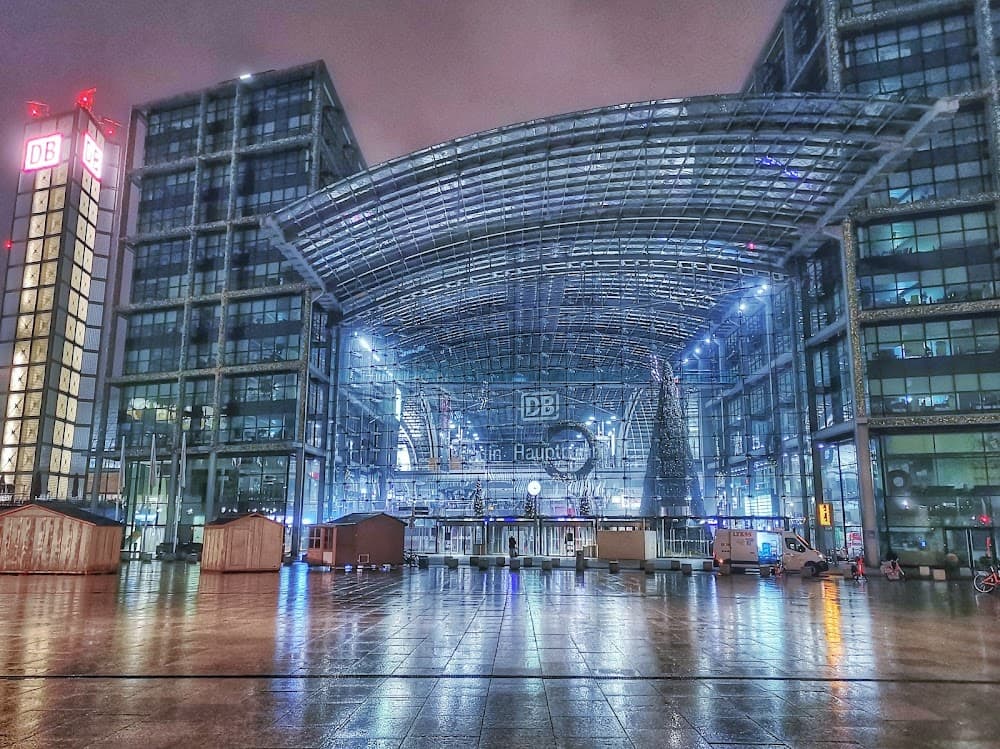
Berlin Hauptbahnhof
Europe's largest crossing station (2006) by von Gerkan, Marg und Partner, a cathedral of glass where train lines stack on multiple levels beneath a great curved shed. High-tech engineering staged as civic spectacle.
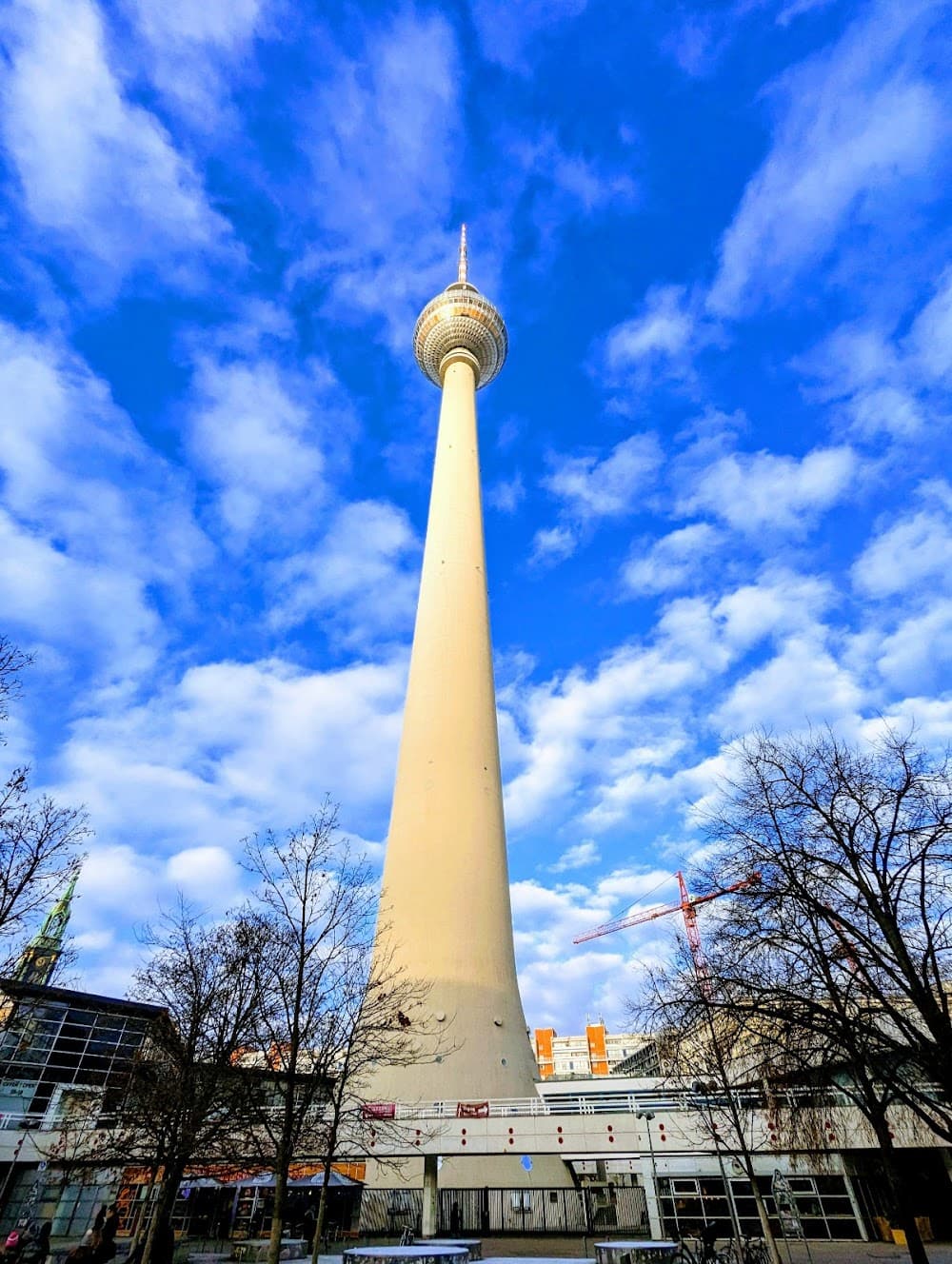
Berlin TV Tower
The 368m GDR television tower (1969) at Alexanderplatz, East Germany's tallest statement of socialist progress. Its mirror-balled sphere famously throws a cross of reflected sunlight — nicknamed the 'Pope's Revenge' by Berliners.
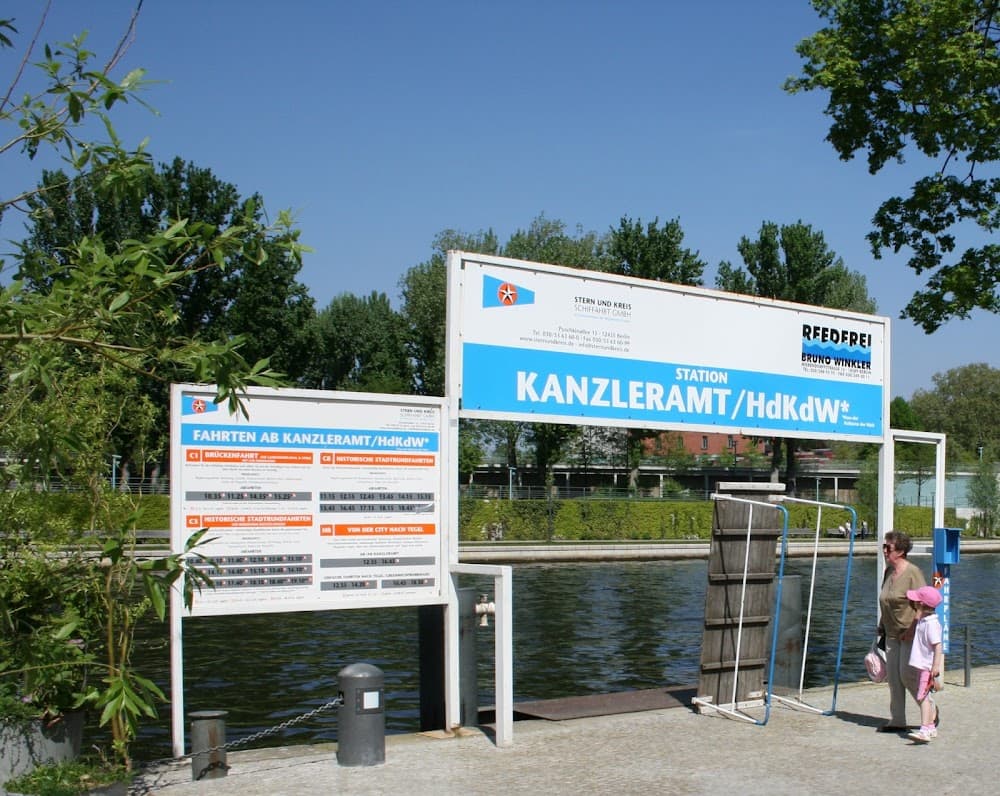
House of World Cultures
The 1957 Congress Hall, an American gift to West Berlin with a daringly cantilevered parabolic roof — Berliners dubbed it 'the pregnant oyster'. The roof partly collapsed in 1980 and was rebuilt; today it's a cultural centre beside the Spree.
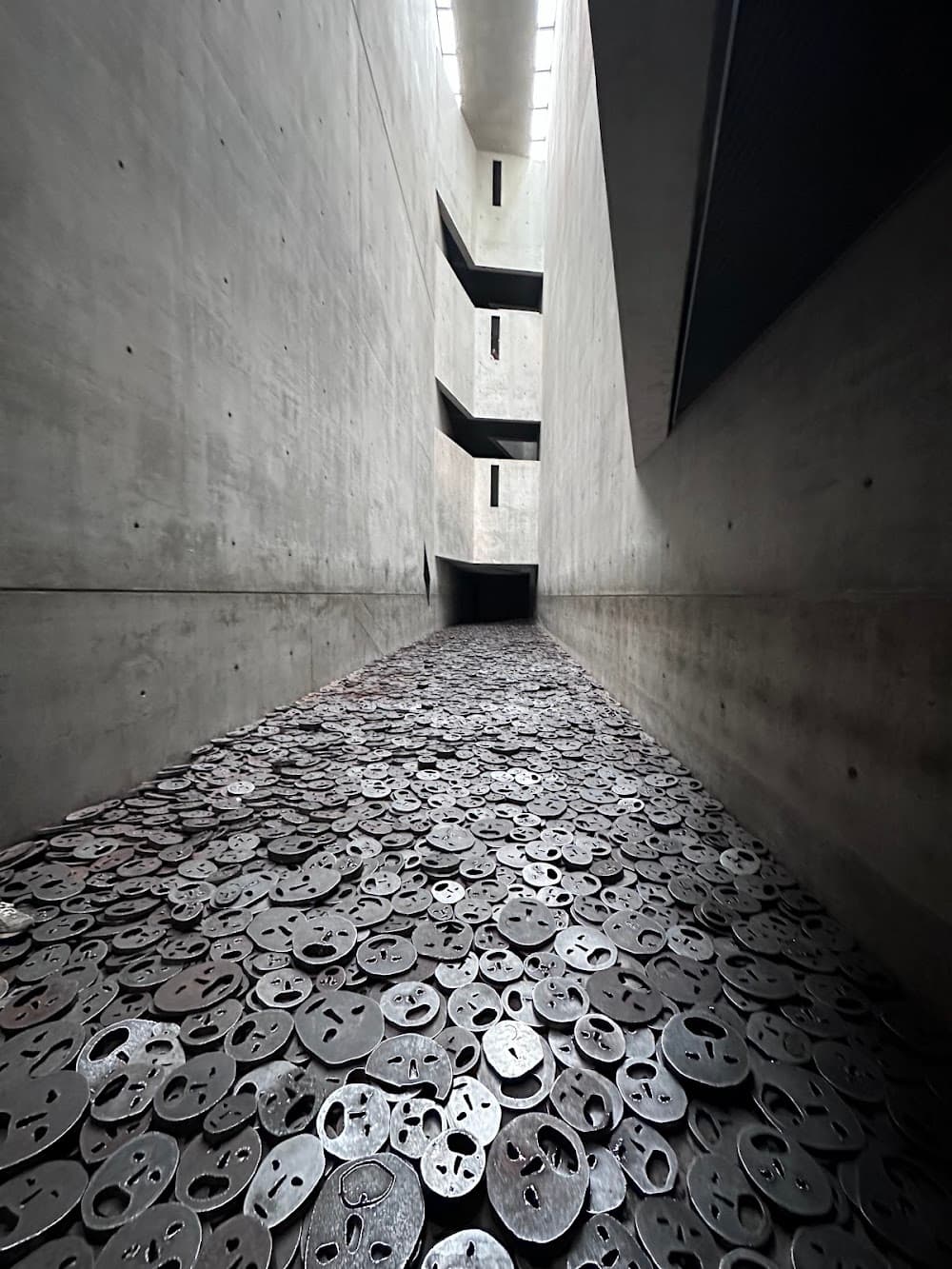
Jewish Museum Berlin
Daniel Libeskind's 2001 zinc-clad zigzag, slashed with angular windows and organised around inaccessible 'voids'. Deconstructivist architecture as emotional argument — disorientation, absence and rupture made spatial. The building opened to acclaim before any exhibits were installed.
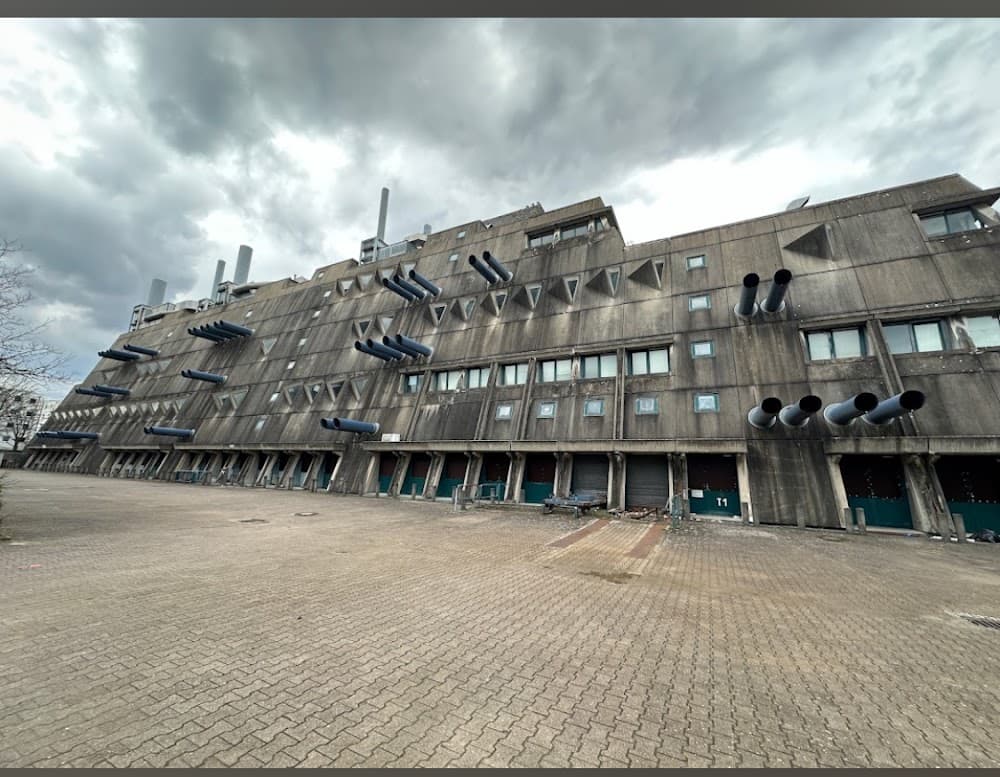
Mäusebunker
Gerd Hänska's former animal laboratory (1981) in Lichterfelde — a windowless battleship of blue-grey concrete bristling with diagonal ventilation pipes. Among Berlin's most extreme brutalist objects, recently saved from demolition by a preservation campaign.
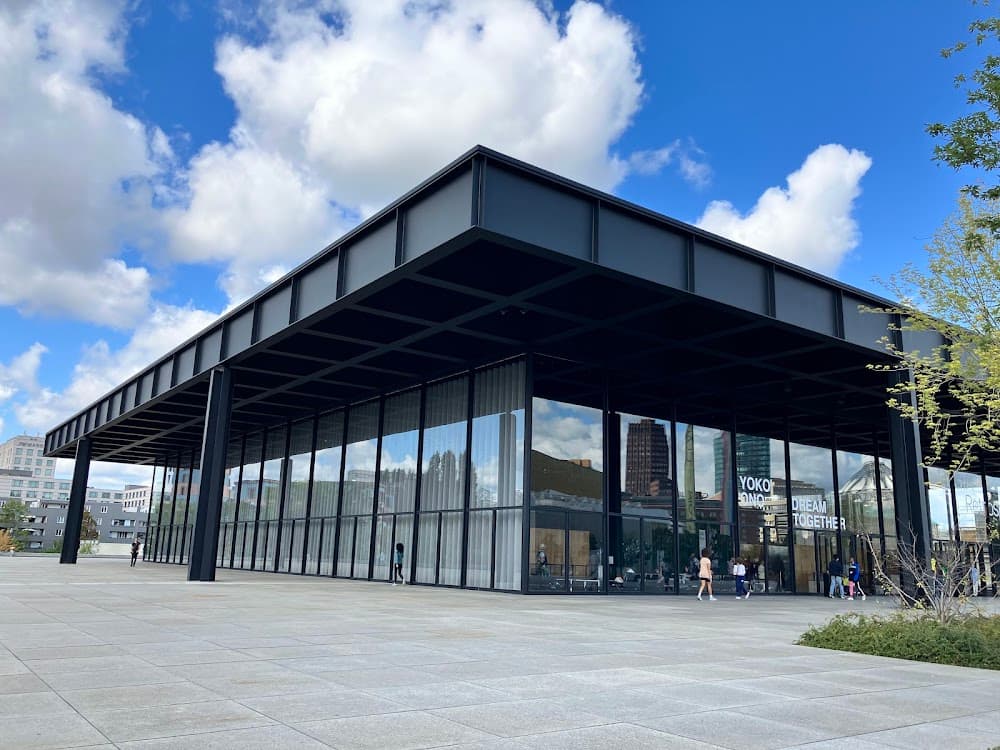
New National Gallery
Mies van der Rohe's final building (1968), a steel-and-glass temple where a vast coffered roof floats on slender cruciform columns over a column-free glass hall. The pinnacle of his 'universal space' ideal; meticulously restored by David Chipperfield in 2021.
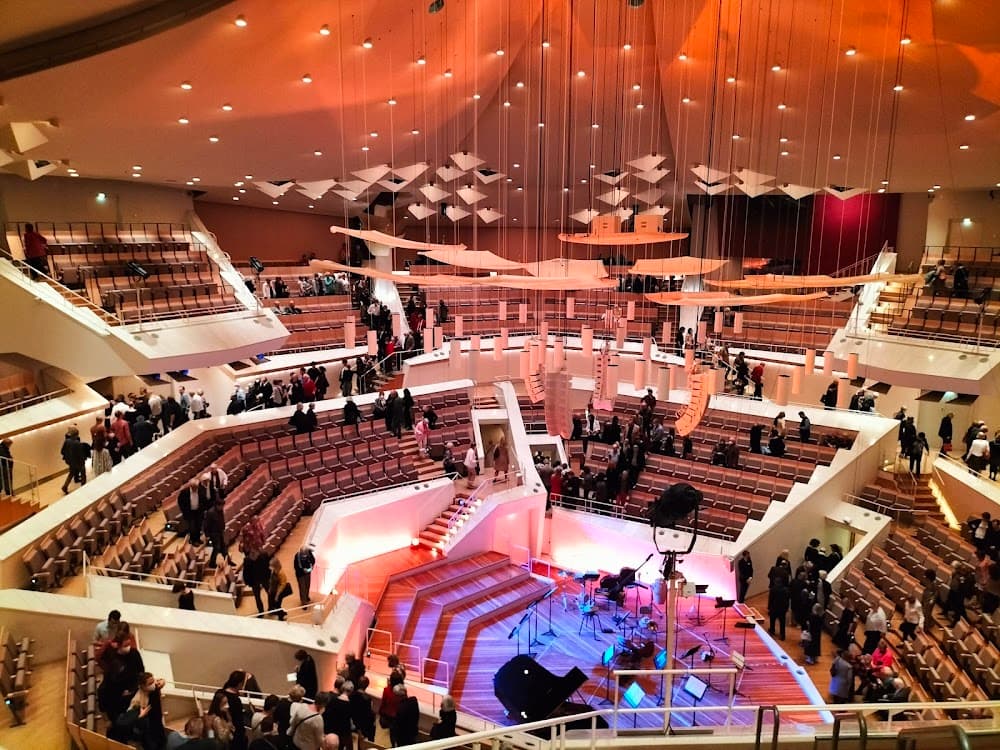
Philharmonie Berlin
Hans Scharoun's 1963 concert hall put the orchestra in the centre and wrapped terraced 'vineyard' seating around it — radical organic modernism that rewrote how concert halls are designed worldwide. The tent-like gold facade is unmistakable on the Kulturforum.
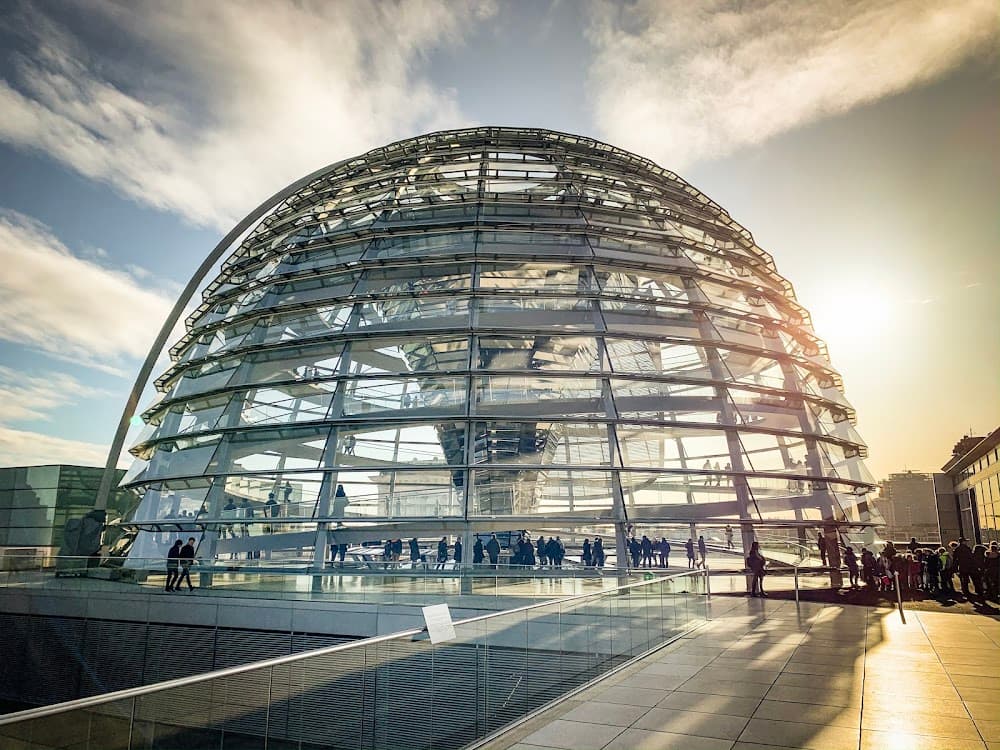
Reichstag Building
Paul Wallot's 1894 parliament building, gutted by fire and war, reborn in 1999 when Norman Foster crowned it with a walkable glass dome. Visitors spiral above the debating chamber — a literal architecture of transparency over German democracy.
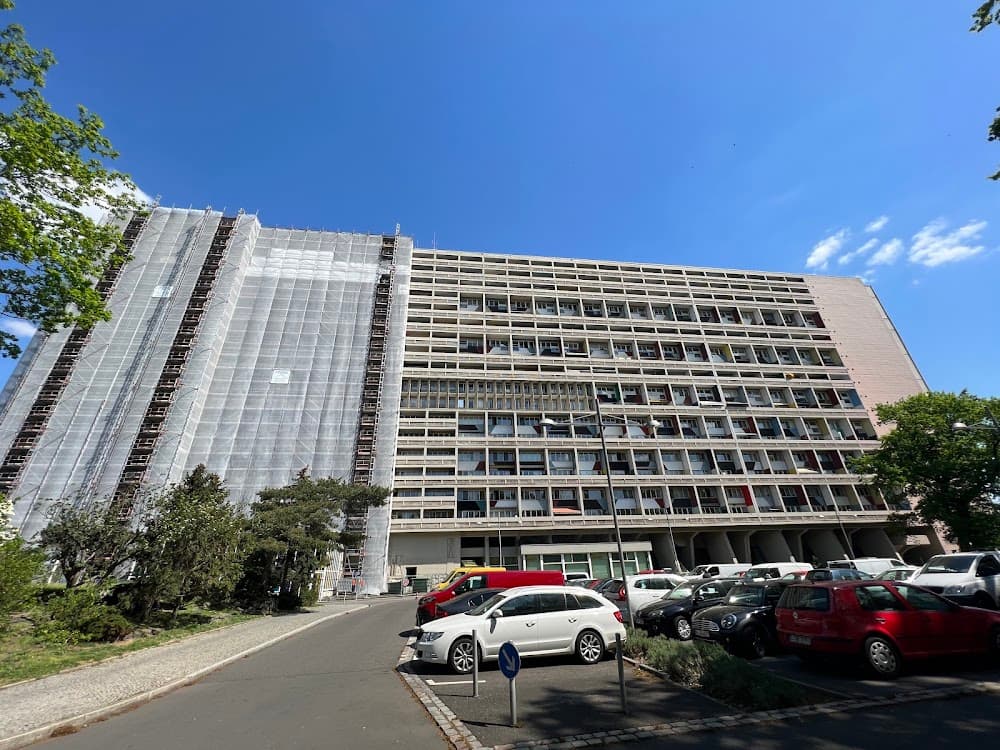
Unité d'Habitation of Berlin
Le Corbusier's Berlin Unité d'Habitation, built for the 1957 Interbau exhibition near the Olympic stadium. A self-contained 'vertical village' on pilotis with his Modulor proportions, though built taller and altered from his intentions.