Bangkok
Curated by Seven Places
Retail
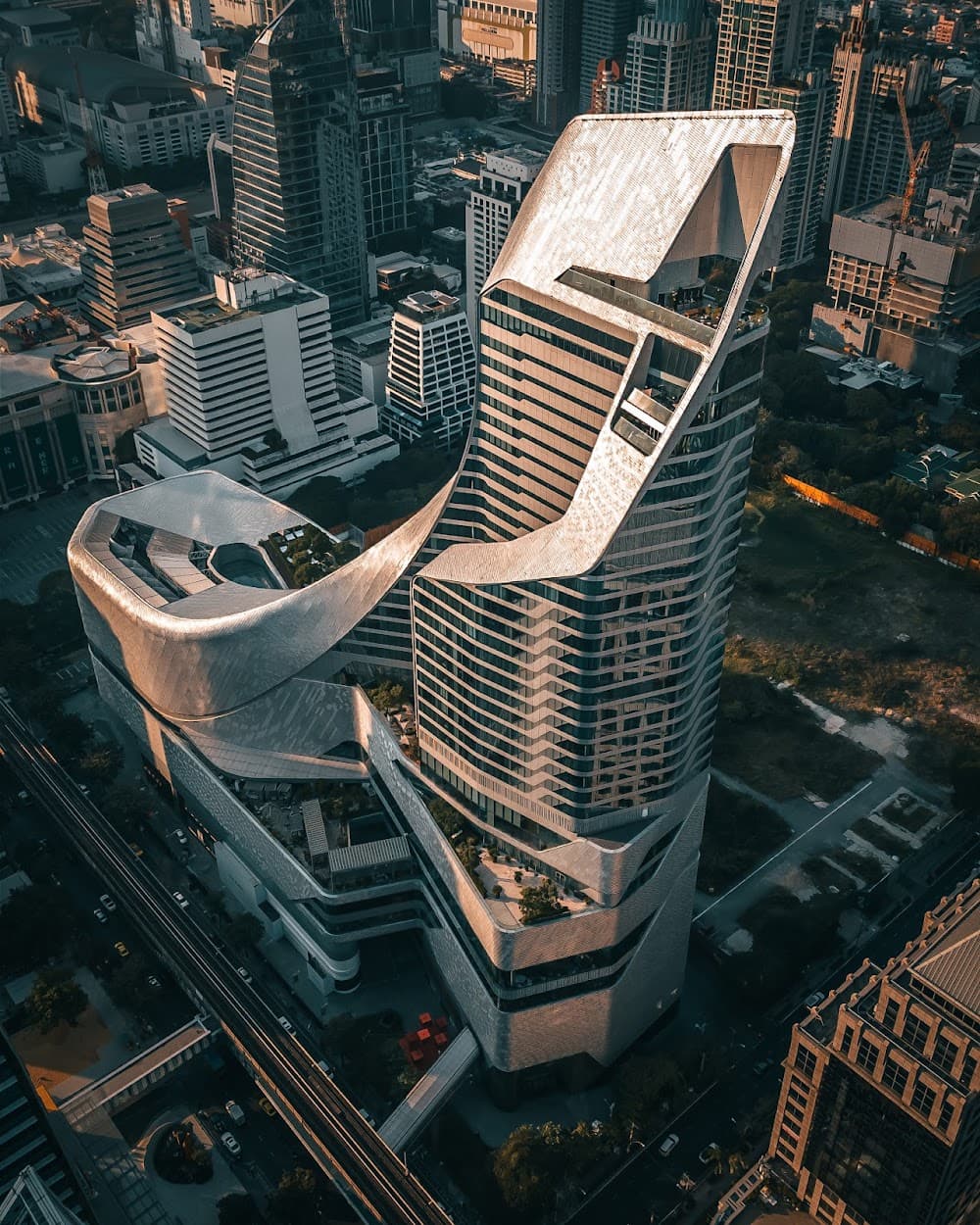
Central Embassy
AL_A (Amanda Levete)'s luxury mall and hotel (2014) on Ploenchit, a single sculptural form sheathed in roughly 300,000 anodised-aluminium tiles that taper into a flared, scaly skirt. Sinuous parametric design in the retail heart of the city.
Culture
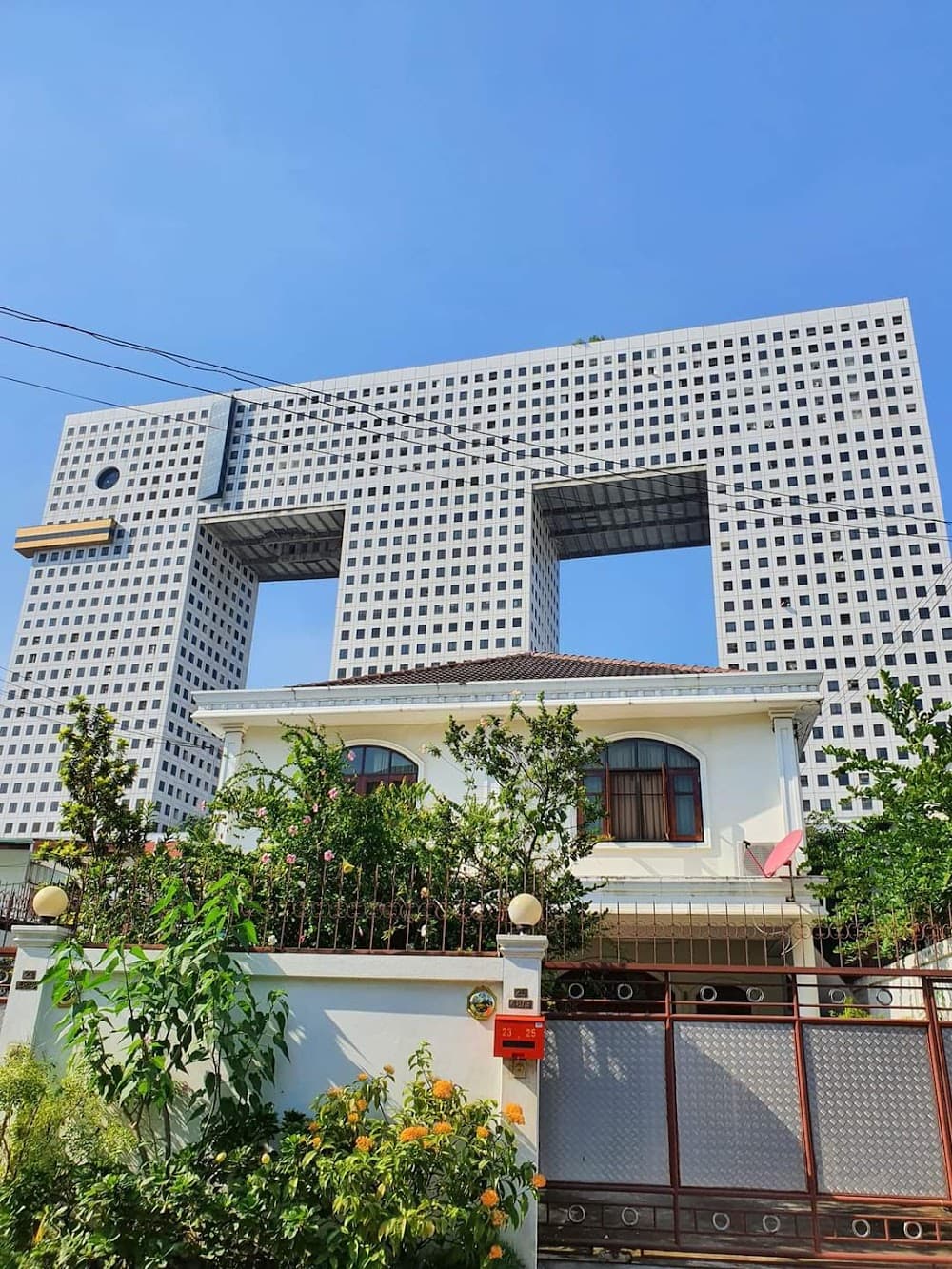
Elephant Tower
Sumet Jumsai's 1997 tower (the Chang Building) on Phaholyothin, whose stacked volumes read unmistakably as a giant elephant — tusks, ears, eyes and all. Among the world's most literal pieces of figurative architecture.
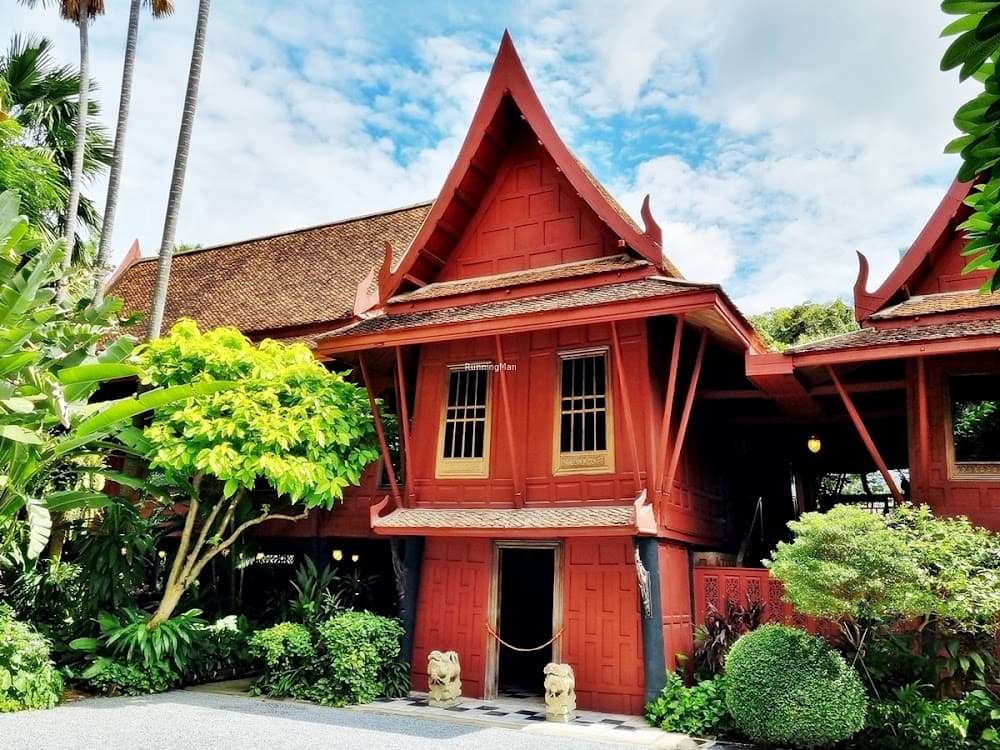
Jim Thompson House Museum
The American silk entrepreneur's 1959 home, assembled from six antique teak houses raised on stilts around a garden by a canal. A beautifully curated essay in traditional Thai domestic architecture, kept as a museum.
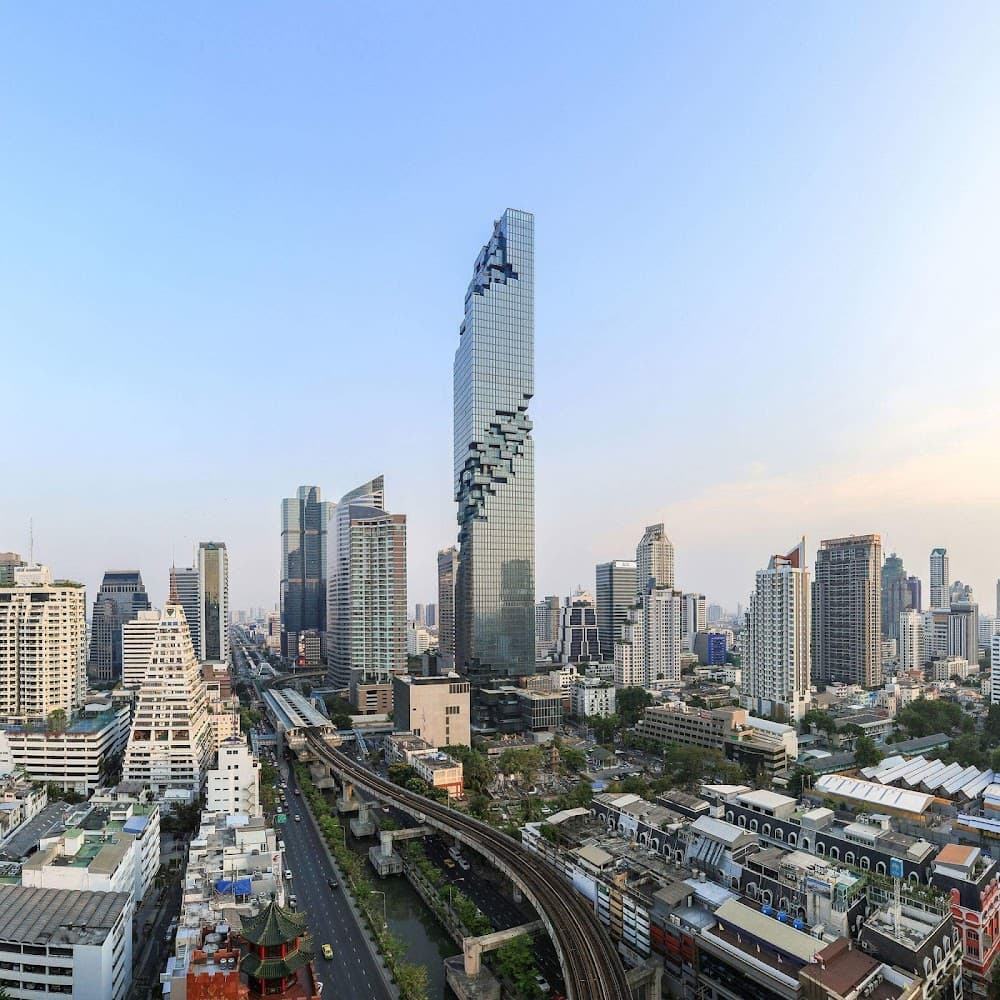
MahaNakhon
Ole Scheeren's 2016 tower, briefly Thailand's tallest, wrapped in a spiralling 'pixelated' ribbon of cut-away terraces that make the glass skin appear to crumble. A glass skywalk and rooftop bar crown it.
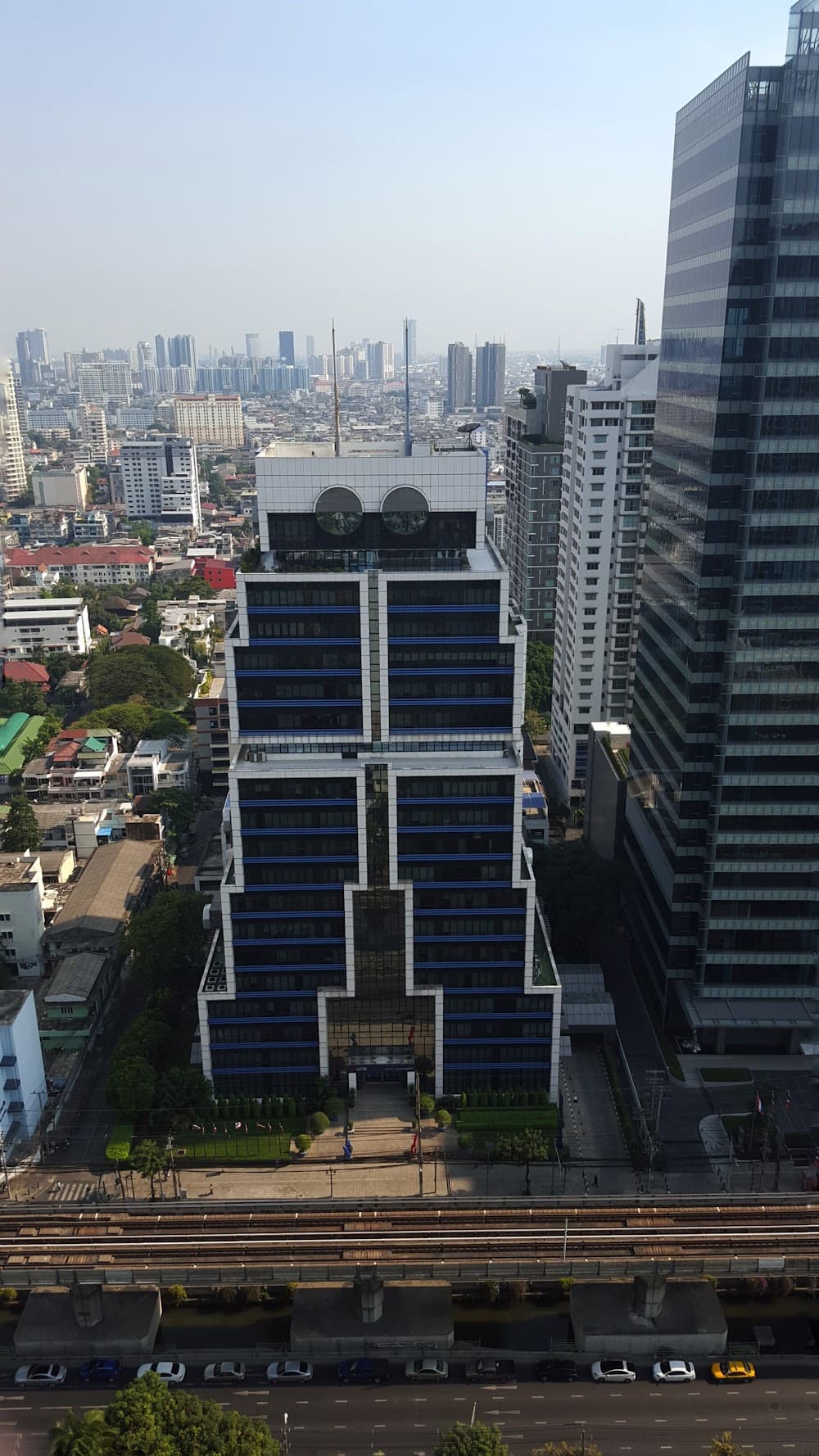
Robot Building
Sumet Jumsai's 1986 bank headquarters on Sathorn, shaped like a stylised robot complete with nut-and-bolt eyes and antennae. A witty, much-loved icon of postmodernism and a reaction against high-tech sameness.
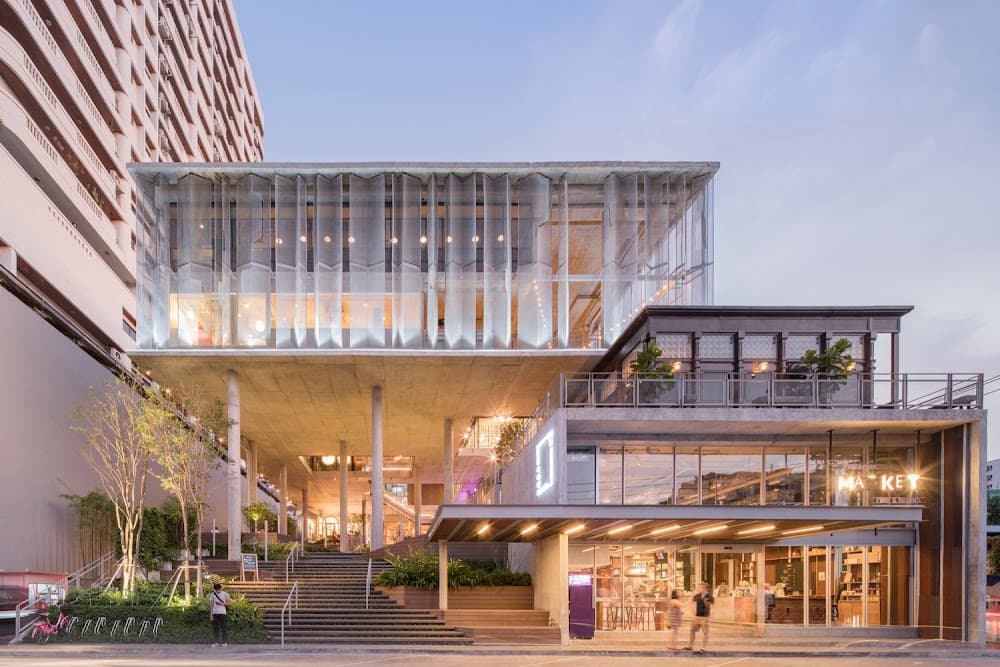
The Commons Thonglor
Department of Architecture's Thonglor community mall (2016), conceived as a stepped, open-air 'ground' of terraces and shade that invites breeze and lingering rather than sealed air-con boxes. A widely admired model of tropical, social retail design.
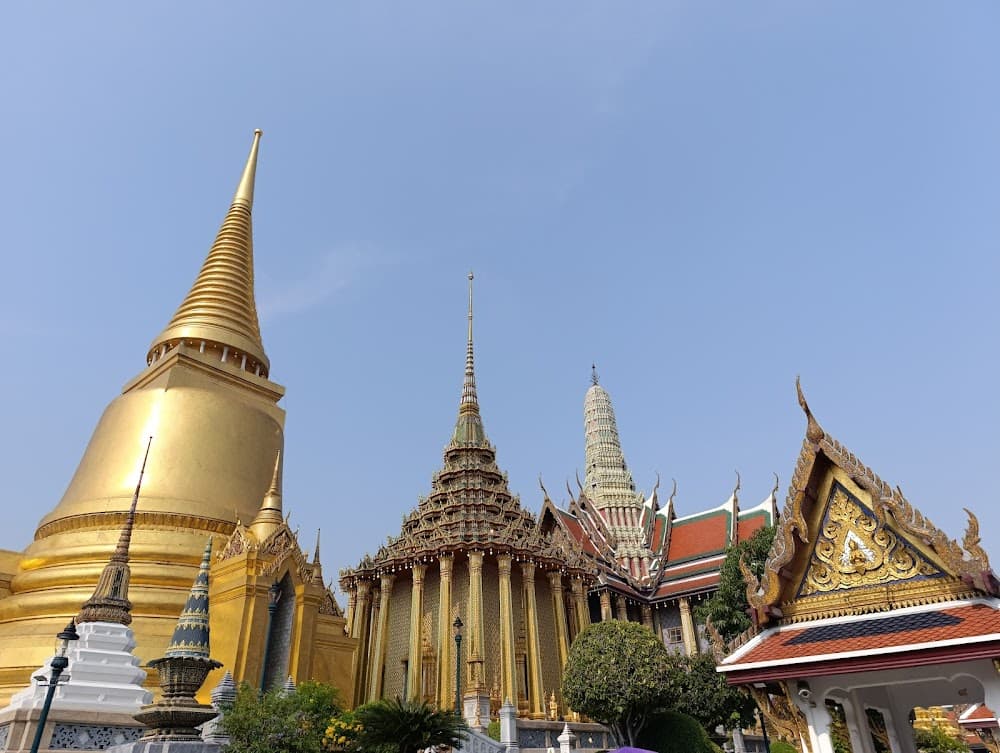
The Grand Palace
The royal complex begun in 1782, a dazzling compound of gilded spires, glass-mosaic chedis and the Temple of the Emerald Buddha. The definitive showcase of Rattanakosin-era Thai religious and palatial architecture.
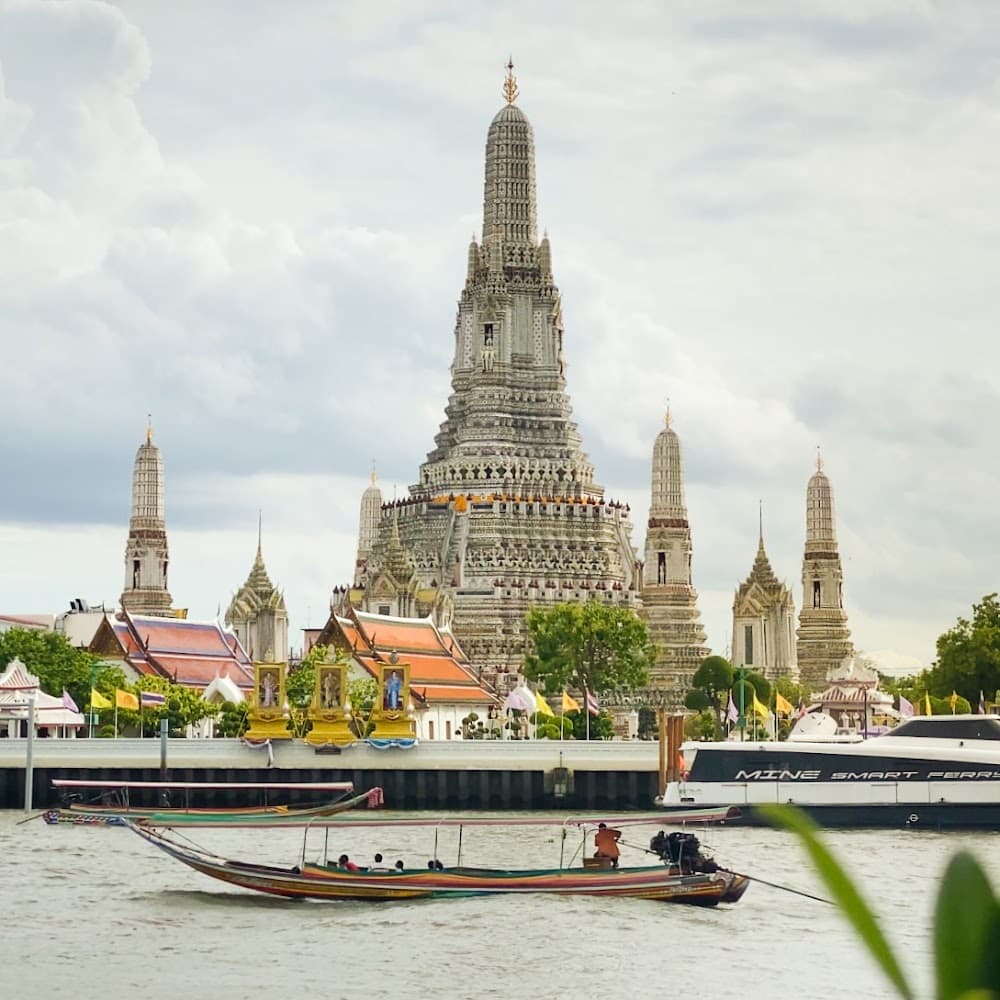
Wat Arun Ratchawararam Ratchawaramahawihan
The Temple of Dawn on the Thonburi bank, its central Khmer-style prang rising ~70m and encrusted with broken Chinese porcelain that glints across the river. One of Bangkok's most photographed silhouettes, especially at sunset.
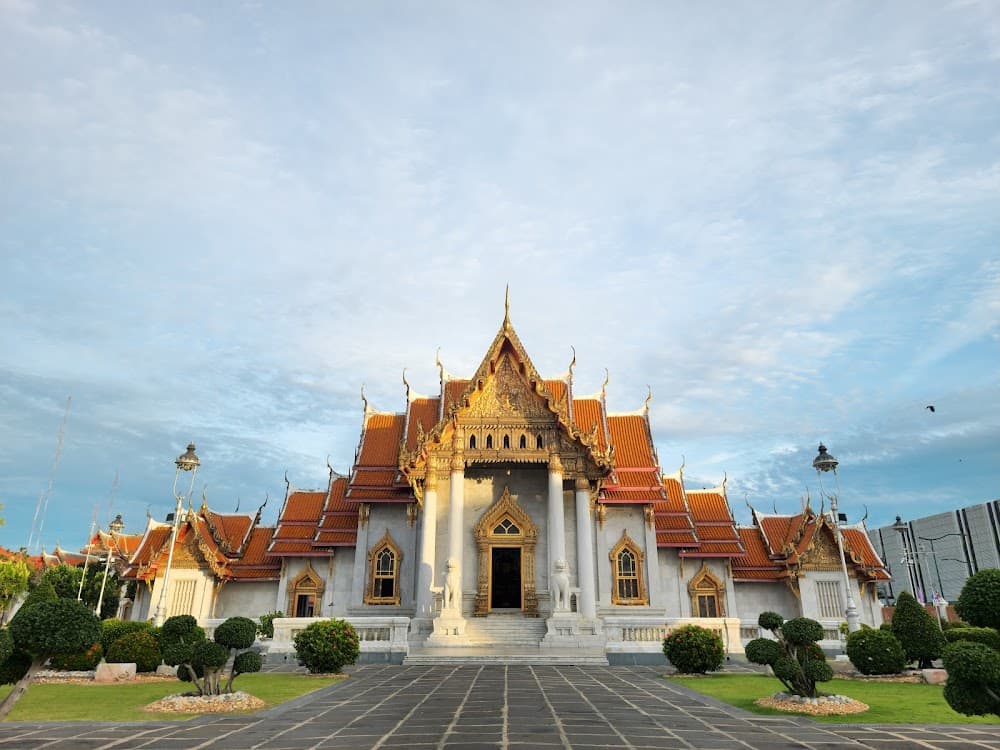
Wat Benchamabophit Dusitwanaram
A 1899 royal temple by Prince Naris, built in white Carrara marble with a symmetrical, almost Beaux-Arts clarity and stained-glass windows. A refined fusion of traditional Thai form and Western technique — and the back of the 5-baht coin.